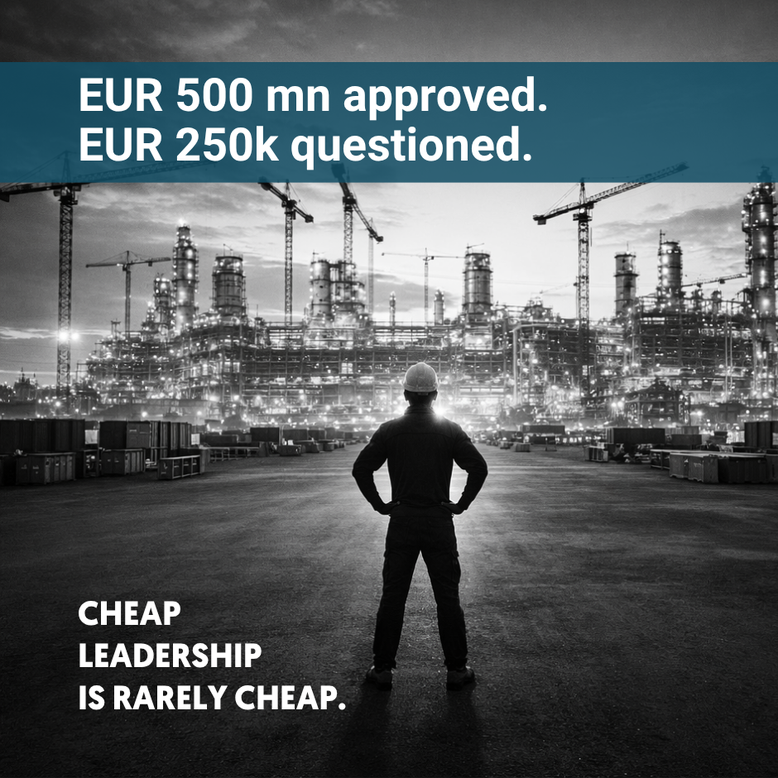
Let that sink in.
In large capital projects, this pattern is hard to ignore:
Around 9 out of 10 megaprojects experience cost overruns, often exceeding 50% according to PMI.
And even below megaproject scale, the picture is far from reassuring. Independent Project Analysis (IPA) shows that poorly functioning project teams average ~30% cost overruns and over 50% schedule delays.
This is not a technology or strategy problem. It's an execution problem.
And, from what I've seen across projects in the process industry – including chemicals, energy, and pulp & paper – the difference is rarely the technology.
It's the team.
The best projects I've seen had a few things in common:
- The right project leader in place before front-end loading (FEL) was complete.
- Clear roles and accountability across all functions.
- Strong integration between engineering, operations, and construction.
- Risks identified and challenged during FEL – not during execution.
This is exactly what IPA research points to:
Projects with strong early definition and well-structured teams perform significantly better.
And yet, we still treat project leadership as a cost. We invest heavily in:
- Engineering
- Technology
- Business cases
But we hesitate when it comes to the people who actually deliver the outcome.
Here's the uncomfortable truth:
Your project leader is not an overhead cost.
They are risk control.
Because, in capital projects, performance is not just a function of scope or technology. It's a function of the team you put in place before execution even starts.
Underinvest there, and the cost shows up somewhere else: in delays, in rework, in missed start-ups, and in lost value.
Cheap leadership is rarely cheap.
👉 If you're investing hundreds of millions in CAPEX – why would you compromise on the leadership that determines the outcome?
Write a comment