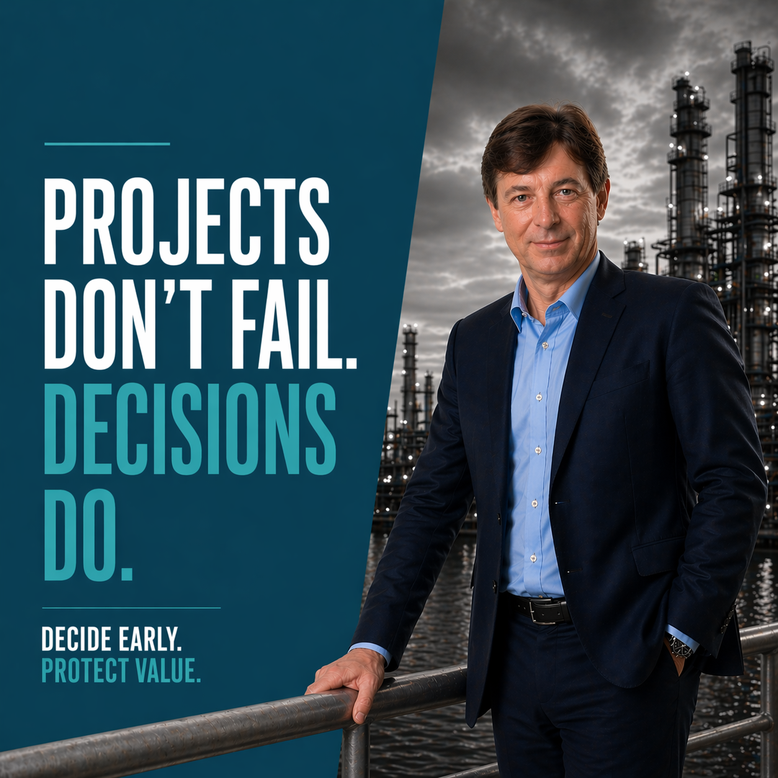
Some time ago, we were asked to review a large industrial project valued at well over EUR 100 mn.
On paper, it was "under control." In reality:
- Schedule already slipping
- Contractors misaligned
- Key risks known but not addressed
At that point, the delay exposure was well into the double-digits.
Nothing dramatic. No crisis. Just drift.
In the first meetings, we were struck by this:
Everyone saw the issues, but no one was making decisions. Instead, there was more reporting, coordination, and alignment discussions.
All reasonable. All logical. But these measures were ineffective.
The core problem wasn’t a lack of information.
It was hesitation.
At one point, we stopped the discussion and made 3 decisions within 48 hours:
- Clarified scope ownership
- Reset contractor interfaces
- Escalated two known risks that had been sitting for weeks
These were uncomfortable decisions, but necessary.
Within weeks, the project stabilized.
Not because we introduced new tools.
It was because we removed delays.
We’ve seen this repeatedly in the energy, chemical, pulp & paper, and process industries.
Large projects don’t collapse overnight.
They erode when decisions are postponed.
The higher the investment, the more expensive that erosion becomes.
Most organizations aren't lacking insight.
They lack the willingness to act early.
👉 Where have you seen hesitation cost the most – in terms of time, money, or credibility?
Write a comment